Showing posts with label LGBTQI. Show all posts

Friday, February 20, 2015

Friday is the (Inspirational) Movie Night: Philomena (2013)

#inspirationalmovies

Continuing with my special mini-cycle dedicated to Catholicism and women, today's movie is basically a (polished up) sequel of The Magdalene Sisters. 

Philomena (2013, Stephen Frears) is based on a true story that nevertheless feels somewhat unbelievable. Well, there's reality for you. If after The Magdalene Sisters you asked yourself about the possible futures of the girls who got away from the religious institutions controlling them, here you have the story of Philomena Lee.

There's difference and nuance, though. In the eyes of the religious establishment Philomena had comitted a sin. She had sex before marriage (oh!) with someone she (apparently) barely knew (gasp!) and she liked it! Mind you, this is a very important difference between the discourse that The Magdelene Sisters present and Philomena's story. As Rose in last week's movie (in contrast of other women in that film), Philomena did actually transgress the social norms and was very unlucky to become pregnant as a consequence. And her child was taken away from her.
This is the double sword of the story. On one hand, there's actual pleasure involved. She enjoyed being with that boy. On the other hand, this very fact makes her even more vulnerable to all the injustice done to her afterwards. If your religion (and people in position to punish you) maintain that you have to repent and suffer for your sins, and you know very well that you have transgressed, the likelihood of rebellion seems to be lower.

Yet this is only a part of the story. The second drama revels when Philomena - already older and after a marriage and other children - gets help of a journalist in trying to find her son. Apart from a pretty unbelievable turn of events... Ah, go, see it! ... you get the amazing dame Judi Dench playing someone torn apart by her trauma of loss of a child and faith that's represented by the same people who treated her so badly.

An additional feature that makes the movie a treat is the clash of worlds that her interactions with the world class journalist embarked upon a human interest story lead to. These ar class difference and not gender driven, and challenge the airbrushed image of drama-worthy and interesting people. Good for you, Philomena!

Friday, November 28, 2014

Friday is the (Inspirational) Movie Night: Wadjda (2012)

#inspirationalmovies


Wadjda (2012, Haifaa Al-Mansour) is exactly what you expect when watching a well made movie telling you tales about cultures very different from the one you live in: gives you a general picture of a society while stating very clearly that it's by no means completely homogeneous. Very well. And when such a movie come from the first ever Saudi-Arabian female movie director, your feminist obligation is to go and watch!

The premise is very simple and compelling: What happens when a girl that's already struggling with quite restrictive cultural norms of her society gets a strong urge to trespass even more? Or, in other words, what happens when Wadjda, a young Saudi-Arabian girl, wants a bicycle?

So get the movie, gather all the children (and not so children) you care about and watch Wadjda with them. And if you live in a context different of that of Wadjda be prepared to answer many questions. Why is everybody against her having a bicycle? Why are all the women covering themselves in black when leaving their own spaces? Why are girls not to be friends with boys? Why can men have several wives (and abandon their wives if they are unable to give them male children)? Why are girls followed very closely by their teachers to make sure they behave in a certain way? Why girls suspected of a lesbian relationship publicly shamed? And so on... Most importantly, what is likely to happen with Wadjda when she gets older? What kind of life is she likely to lead?

It may also help to ask those questions to yourself too. Just to realize what are the things that you most likely take for granted in life.

Friday, October 17, 2014

Friday is the (Inspirational) Movie Night: Victim (1961)

#inspirationalmovies


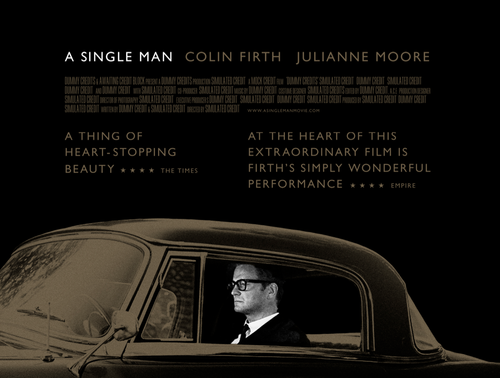
Retaking the theme of sexual diversity in restrictive cultures (well, at least more restrictive than others), here you have a historical gem: Victim (1961, Basil Dearden). While it's about men surrounded by men and women are just part of the context that refuses to accept and embrace (see Eyes Wide Shut (2009) for a contemporary twin and A Single Man (2009) for a depiction of the same era done recently), it still adds powerfully of the narrative of consequences of criminalization of consensual sexual behaviour among adults.

The movie as such - while depicting the horrors to what anti-sodomy laws may lead - is very progressive in the generalized message and surprises with that. It was 1961, think of that.

Also, the central marriage shown illustrates the importance of communication in the couple and mutual effort to understand each other. Obvious stuff, but still very important and not as widely practiced as needed.

Friday, July 25, 2014

Friday is the (Inspirational) Movie Night: Fake Orgasm (2010)

#inspirationalmovies


While normally we do not mind spoilers (assuming that analysis = spoiler), this is an exception. Click "play" and watch this 2010 documentary on conceptual/performance artist Lazlo Pearlman. The title Fake Orgasm refers to one of his performance which included a fake orgasm competition... but that's just the beginning as he goes much farther exploring and demolishing the notions of gender, heteronormativity, gendered expectations in the bed and out of it.

If you are already familiar enough with the notion that gender binary is an anachronistic concept, this won't be that surprising, of course. But it can still give you ideas about possible work in bringing this message to other (unsuspecting) people and breaking down the cages that social constructs like this may be for people.  

There are some moments of Spanish spoken with no translation in this version, but you should be able to manage through it. All the crucial narrative is in English.

Friday, April 4, 2014

Friday is the (Inspirational) Movie Night: Tomboy (2011)

#inspirationalmovies


It may be very difficult for older people to admit, but the life of young - and very young - can be extremely complex. Classical literature is full of examples, but today's one is a recent French cinema gem.

Tomboy (2011, Céline Sciamma) offers a moving story about trying to fit in better in your own body while living in an extremely gendered world.

It will (well, it could, if you'll let it) get you thinking about:
- How little external appearance tells you about people. And how - at the same time - you should respect the signals people are sending. Even if that takes you into an uncharted territory (even beyond gender binary, uh oh).
- How much inner drama and struggle is brought up when you realize that you should make serious adjustments in order to fit in. Especially if you feel that you cannot share that with anybody. Especially if people assume that you are too young to have any coherent idea about what's going on.
- How beyond the "oh, children are so cruel" stands nothing more than the boxed thinking of the adults transmitting certain notions. You cannot expect little children - those people still just ordering basic ideas about human life - to question and bend the old toxic ideas right away. Adults should lead by example.

It's bittersweet, short, and very touching. What else do you need?

Friday, March 28, 2014

Friday is the (Inspirational) Movie Night: Gay men in homophobic cultures

#inspirationalmovies


While these are not an obvious part of our repertoire, they still make sense to be watched from a feminist and I Being a Girl perspective. Even though cis-men are at the center of these movies, and women is only a backdrop for their drama and passion, it still emanates from no other place than patriarchy and the obsession with controlling the sexual and amorous lives of people.

So, today's offer is two movies that look into the lives of gay men in culturally very restrictive contexts: A Single Man (2009, Tom Ford) and Eyes Wide Open (2009, Haim Tabakman). Set in two very different but undoubtedly socially controlling places - 1960's USA and nowadays Israel among the Orthodox Jews - both of them tell the dramatic tale of how even male privilege won't save you if you transgress the code of sexual morality.

Of, course there are differences. The aesthetics, trying to be true to time and place depicted, are very different. Eyes Wide Open adds a religious restriction where A Single Man deals with a more secular type of institutionalized homophobia. It is loss of a loved one when you are not really allowed to mourn vs. the discovery of lust where it's strictly forbidden and harshly punished. Nevertheless, the main theme is the social pressure to negate ones real desires and feelings in order to keep up with what's esteemed to be proper and moral. And what that does to people.

One of the lesbian versions of the same story would be Fire (1996, Deepa Mehta), already covered before here. 


Friday, March 21, 2014

Friday is the (Inspirational) Movie Night: HIV/AIDS in the big cinema

#inspirational movies 

Putting this under "inspirational" may be somewhat questionable. Movies that have HIV/AIDS as their central theme are not even expected to be inspirational (or uplifting). But in the light of the recent incomer into the genre - Dallas Buyers Club (2013, Jean-Marc Vallée) - a little, very critical round-up seems adequate. And all of those movies touch the activism theme, so they are relevant anyways.

While our all-time favorite still is Rent (2005), these do have some attractive points to it (and downsides too, unfortunately). Curiously enough, there's a decade between the release dates for all three while there are set pretty much around the same time, mid-eighties up to early nineties:

Philadelphia (1993, Jonathan Demme), the ultimate HIV/AIDS classic on the legal battle against discrimination. Has quite some real life inspiration.

Lessons learned: (a) privilege does not protect you from HIV, and (b) homophobia can be cured dealt with if empathy kicks in and if close contact / familiarity is established.

Lacks in the department of: women. Only at the background, and the whole battle for rights is fought among privileged men.


Angels in America (2003, Mike Nichols), the we-are-all-connected esoteric epic on sexuality, coupledome, love, and HIV.

Lessons learned: (a) privilege does not protect you from HIV, and (b) HIV affects also those that are themselves sero-negative but with their lives inter-weaved in those of PLWHA, an obvious truth, but beautifully depicted. Also, (c) you cannot pray away homosexuality. Nor mental health issues.

Lacks in the department of: spirituality. All the angels, prophets, ghosts thing goes from whimsical to annoying to just crazy at times.


Dallas Buyers Club (2013, Jean-Marc Vallée), the quite shitty movie with a pseudo-alternative HIV/AIDS narrative that just got 3 Oscars. Also inspired by an actual person. Caused a major stirring not only because of the overall sexism of the movie but because of Jared Leto - a cis-male - being cast to play a trans person, and about how he does that. 

Lessons learned: (a) heterosexuality (and homophobia) will not protect you from HIV, (b) homophobia is not cured dealt with just by lose contact / familiarity if no empathy can be activated, (c) the big pharma says is not always in your best interest, (d) traditional masculinites are bad for your health.

Lacks in the department of: women. Only at the background, and the whole battle for rights is fought among men. Women are the angry but passive doctor, nurses, and random people that men have sex with.

Other movies that we have talked about before where HIV drives some part of the plot are Kids (1995) and The Hours (2002).