Showing posts with label usa. Show all posts

Friday, February 20, 2015

Friday is the (Inspirational) Movie Night: Philomena (2013)

#inspirationalmovies

Continuing with my special mini-cycle dedicated to Catholicism and women, today's movie is basically a (polished up) sequel of The Magdalene Sisters. 

Philomena (2013, Stephen Frears) is based on a true story that nevertheless feels somewhat unbelievable. Well, there's reality for you. If after The Magdalene Sisters you asked yourself about the possible futures of the girls who got away from the religious institutions controlling them, here you have the story of Philomena Lee.

There's difference and nuance, though. In the eyes of the religious establishment Philomena had comitted a sin. She had sex before marriage (oh!) with someone she (apparently) barely knew (gasp!) and she liked it! Mind you, this is a very important difference between the discourse that The Magdelene Sisters present and Philomena's story. As Rose in last week's movie (in contrast of other women in that film), Philomena did actually transgress the social norms and was very unlucky to become pregnant as a consequence. And her child was taken away from her.
This is the double sword of the story. On one hand, there's actual pleasure involved. She enjoyed being with that boy. On the other hand, this very fact makes her even more vulnerable to all the injustice done to her afterwards. If your religion (and people in position to punish you) maintain that you have to repent and suffer for your sins, and you know very well that you have transgressed, the likelihood of rebellion seems to be lower.

Yet this is only a part of the story. The second drama revels when Philomena - already older and after a marriage and other children - gets help of a journalist in trying to find her son. Apart from a pretty unbelievable turn of events... Ah, go, see it! ... you get the amazing dame Judi Dench playing someone torn apart by her trauma of loss of a child and faith that's represented by the same people who treated her so badly.

An additional feature that makes the movie a treat is the clash of worlds that her interactions with the world class journalist embarked upon a human interest story lead to. These ar class difference and not gender driven, and challenge the airbrushed image of drama-worthy and interesting people. Good for you, Philomena!

Friday, August 1, 2014

Friday is the (Inspirational) Movie Night: Sylvia Plath movies

#inspirationalmovie

This is a tragic story. We've warned you. But it's also essential for your herstory knowledge and a very good way to empathize with the problematic of The Feminine Mystique, to understand the great drama of those women educated (therefore craving stimulus and self-realization) but confined to running a household and suffering whatever comes in order to keep up the appearances and keep the family together*.

We offer a double feature about the poet Sylvia Plath (1932-1963). Open her wikipedia page, scan through it, then start with the movie version of her acclaimed semi-autobiographical novel The Bell Jar (1963) - The Bell Jar (1979, Larry Peerce). A coming-of-age story gone sour is just what you need to observe the moment when the idealism and ambition (to become a renowned poet) clashes with the adult world. In this case the adult world implies dumbing things down for the audience of a women's magazine, men that think people owe them sex, fear of pregnancy, fear of the future, invasive and traumatic psychiatric treatment, the desire to disappear...

The novel is based on the experience Plath had while doing an internship in a New York magazine and her consecutive mental breakdown. A version about that summer in Sylvia's life can be read in Pain, Parties, Work: Sylvia Plath in New York, Summer 1953.


Then go on with Sylvia (2003, Christine Jeffs) covering Plath's career after the recovery, relationship with Ted Hughes, and suicide at the age of 30. While putting no stigma on Sylvia's history of mental health issues, the movie charts the path from poetry and love, through the hell of betrayal, inability to create and utter abandonment, back to writing from the darkest places of her experience and moving generations of people with the sheer force of her suffering. 

The relationship dynamics are pretty much the same as depicted in Hemingway & Gellhorn (2012) - full of the struggle to create, to get out of the shadow of a celebrity-partner and deal with their ego - just more intense and with a tragic ending.


* Here it is about running a household instead of doing anything else as a consequence of social norms requiring it (while offering almost no alternatives, and demanding that you become a wife and a mother primarily even if you are a great poet, scientist, dancer, doctor...). It is obviously not the same as being able to decide to dedicate yourself to caring because that's what resonates with your most authentic self.

Friday, June 20, 2014

Friday is the (Inspirational) Movie Night: Bringing Up Baby (1938)

#inspirationalmovies

This is a very good one and very bad one at the same time. Weird, I know, but hang in there with me.

Bringing Up Baby (1938, Howard Hawks) is an old fashion comedy-romance with continuous silliness that ends with a happy finale. An almost Shakespearian comedy/mess, if you may. Entertaining, anachronic, and not much feministing to be expected here.

I warn you that most of the movie does point at humans in general - the protagonist very much so - as hapless and ridiculous creatures, unable to communicate among themselves. The most amazing Katharine Hepburn is obliged to go through a series of weird adventures and lots of banter, some of it very witty, some of it very obnoxious... and most of the mess is just because of a romantic whim of hers!

And that's exactly what's so powerful about this classic: the protagonist is a breathtaking, impulsive and clumsy girl that follows her hunches and just really wants to be with Carry Grant timid (and also clumsy) doctor Huxley. She does most extraordinary things and goes places because she has decided that she wants to be with this man. And she's so sharp and witty (so is her aunt, just to add intriguing female characters).

The same relationship dynamics could be very toxic indeed, but not in this case. She's the natural force that brings the dry scientist out of his shell and he (secretly) likes it.
Relax and enjoy, but do not try these tactics at home, at least not to the same extent!


*And the very final (no surprises there, though)!*

Friday, March 28, 2014

Friday is the (Inspirational) Movie Night: Gay men in homophobic cultures

#inspirationalmovies


While these are not an obvious part of our repertoire, they still make sense to be watched from a feminist and I Being a Girl perspective. Even though cis-men are at the center of these movies, and women is only a backdrop for their drama and passion, it still emanates from no other place than patriarchy and the obsession with controlling the sexual and amorous lives of people.

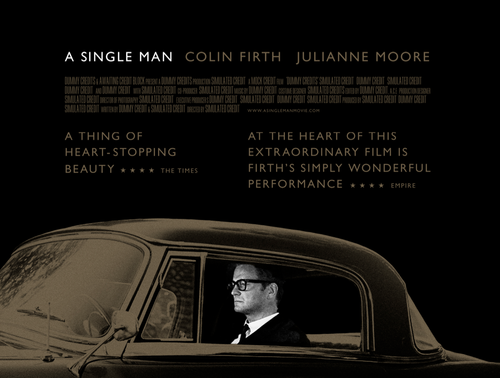
So, today's offer is two movies that look into the lives of gay men in culturally very restrictive contexts: A Single Man (2009, Tom Ford) and Eyes Wide Open (2009, Haim Tabakman). Set in two very different but undoubtedly socially controlling places - 1960's USA and nowadays Israel among the Orthodox Jews - both of them tell the dramatic tale of how even male privilege won't save you if you transgress the code of sexual morality.

Of, course there are differences. The aesthetics, trying to be true to time and place depicted, are very different. Eyes Wide Open adds a religious restriction where A Single Man deals with a more secular type of institutionalized homophobia. It is loss of a loved one when you are not really allowed to mourn vs. the discovery of lust where it's strictly forbidden and harshly punished. Nevertheless, the main theme is the social pressure to negate ones real desires and feelings in order to keep up with what's esteemed to be proper and moral. And what that does to people.

One of the lesbian versions of the same story would be Fire (1996, Deepa Mehta), already covered before here. 


Friday, March 21, 2014

Friday is the (Inspirational) Movie Night: HIV/AIDS in the big cinema

#inspirational movies 

Putting this under "inspirational" may be somewhat questionable. Movies that have HIV/AIDS as their central theme are not even expected to be inspirational (or uplifting). But in the light of the recent incomer into the genre - Dallas Buyers Club (2013, Jean-Marc Vallée) - a little, very critical round-up seems adequate. And all of those movies touch the activism theme, so they are relevant anyways.

While our all-time favorite still is Rent (2005), these do have some attractive points to it (and downsides too, unfortunately). Curiously enough, there's a decade between the release dates for all three while there are set pretty much around the same time, mid-eighties up to early nineties:

Philadelphia (1993, Jonathan Demme), the ultimate HIV/AIDS classic on the legal battle against discrimination. Has quite some real life inspiration.

Lessons learned: (a) privilege does not protect you from HIV, and (b) homophobia can be cured dealt with if empathy kicks in and if close contact / familiarity is established.

Lacks in the department of: women. Only at the background, and the whole battle for rights is fought among privileged men.


Angels in America (2003, Mike Nichols), the we-are-all-connected esoteric epic on sexuality, coupledome, love, and HIV.

Lessons learned: (a) privilege does not protect you from HIV, and (b) HIV affects also those that are themselves sero-negative but with their lives inter-weaved in those of PLWHA, an obvious truth, but beautifully depicted. Also, (c) you cannot pray away homosexuality. Nor mental health issues.

Lacks in the department of: spirituality. All the angels, prophets, ghosts thing goes from whimsical to annoying to just crazy at times.


Dallas Buyers Club (2013, Jean-Marc Vallée), the quite shitty movie with a pseudo-alternative HIV/AIDS narrative that just got 3 Oscars. Also inspired by an actual person. Caused a major stirring not only because of the overall sexism of the movie but because of Jared Leto - a cis-male - being cast to play a trans person, and about how he does that. 

Lessons learned: (a) heterosexuality (and homophobia) will not protect you from HIV, (b) homophobia is not cured dealt with just by lose contact / familiarity if no empathy can be activated, (c) the big pharma says is not always in your best interest, (d) traditional masculinites are bad for your health.

Lacks in the department of: women. Only at the background, and the whole battle for rights is fought among men. Women are the angry but passive doctor, nurses, and random people that men have sex with.

Other movies that we have talked about before where HIV drives some part of the plot are Kids (1995) and The Hours (2002).

Friday, February 28, 2014

Friday is the (Inspirational) Movie Night: Gone with the Wind (1939)

#inspirationalmovies 

"Why does a girl have to be so silly to catch a husband?"

OK, this one is a challenge, because you can interpret it both ways. You could argue that - as in the case of Dirty Dancing, for example - there's not much empowerment or feminism to be found in Gone with the Wind (1939). It's racist. It's androcentric. It's about a privileged girlie facing the world and looking for a man to shelter her from the reality.

But here comes the trick: she ends up having to do stuff for herself. On her own. And that is revolutionary. Well, especially for a Hollywood studio superproduction of 1939 and a novel (written by a woman, take note) describing realities of a Southern-belle suddenly thrown into a turmoil.

Our impulse for including Gone with the Wind among our suggestions come from this article in Spanish critical feminist magazine (google translate should be able to help you!). They ask the following question: how come that even people aware of all those shortcomings (when it comes to aspiring towards empowering feminist fiction) do find it inspirational and somehow - backwardly - groundbreaking?

Their answer goes along the lines of recognizing the qualities of the heroine. Because beyond the superficial persona that Scarlett puts up in order to - very strategically! - try to attract a good match for marriage there is strong person able to grow and overcome the loss of privilege and vanity. An additional credit has to be given for the courage to admit - although through pain and not by choice - that there is life beyond romance and coupledom. And to the conviction that "tomorrow is another day". Resilience, therefore.

By the way, reading the book is always a good idea, too.

Friday, January 17, 2014

Friday is the (Inspirational) Movie Night: Stonewall (1995)

#inspirationalmovies


For a little walk in (again, a dramatized one) history, we offer Stonewall (1995, Nigel Finch). While it has 1990's written all over and sometimes makes you cringe because of awkwardness, it's still worth the while.

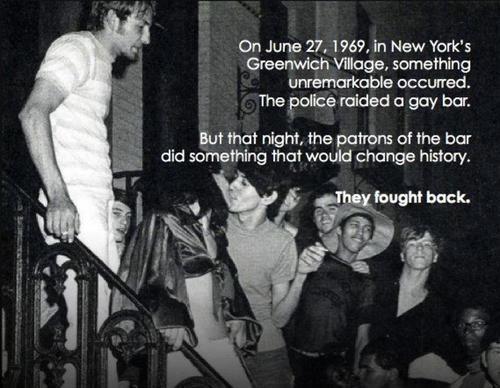
Playing with the idea that every LGBTQI activist has their own Stonewall story (yes, yes, go, read the wiki, we'll wait), so here you have one particular story with all the dramatic ingredients and dichotomies you wanted. Being out / being in closet. Trying to fit in / defying. Creating closed ghettos / suffering discrimination. Different ways of doing activism. Love. Friendship. Corrupt policemen. Street riots. Some jail. Lots of the Shangri-Las and lip-sync. Reminder that the most famous LGBTQI riot (and historical milestone) was fought by trans persons of color and not well-groomed rich white men.
Don't expect much from this, and you might be surprised.